CASE STUDY · UX RESEARCH · EVENT EXPERIENCE
CicLAvia: Unlock Your City
THE DESIGN CHALLENGE
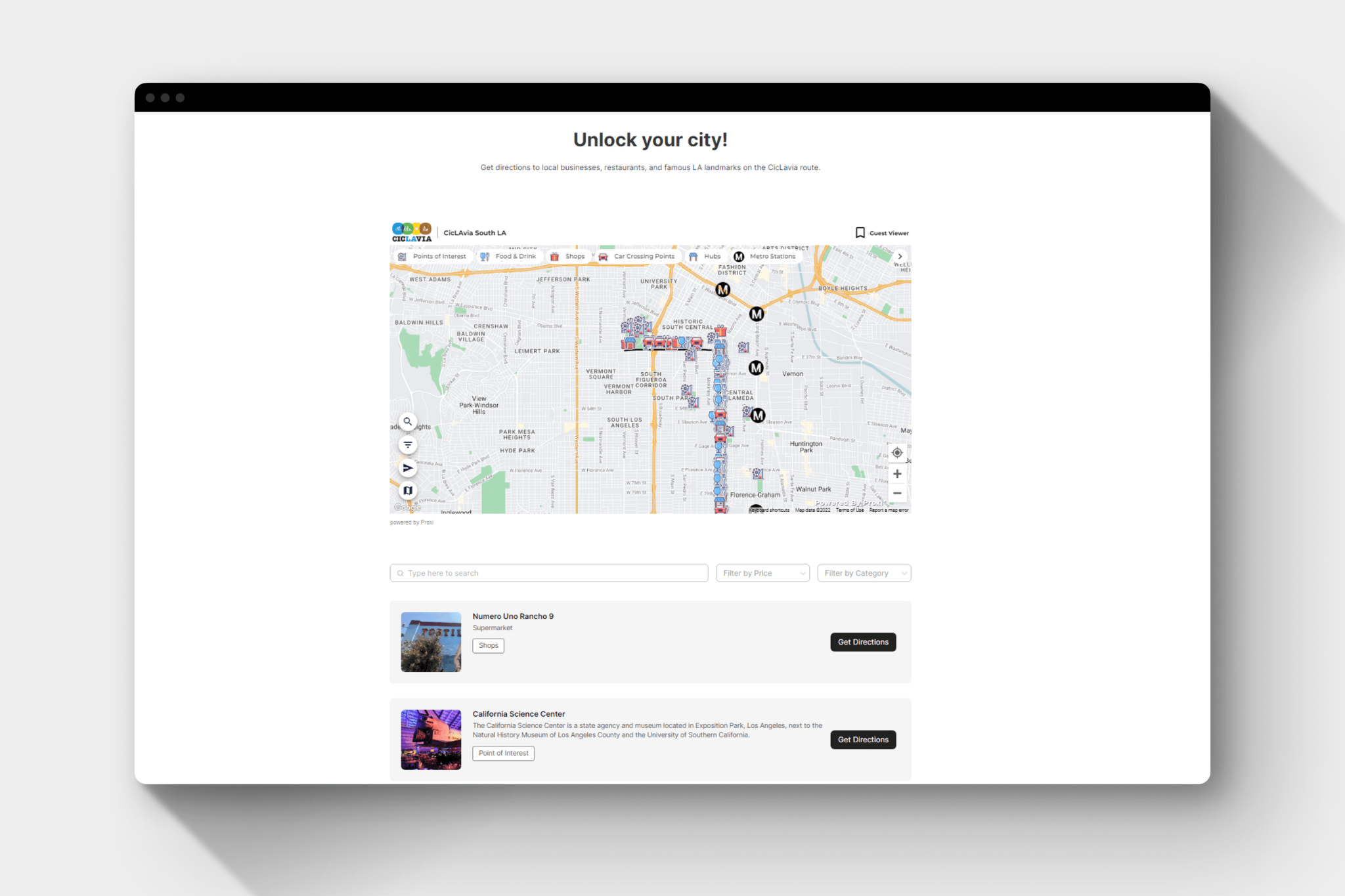
Make event information easier to access while encouraging city exploration.
The existing experience made the interactive map difficult to find and overwhelming on mobile. Attendees also wanted easier access to nearby food, attractions, businesses, parking, and bathrooms.
WHAT WE LEARNED
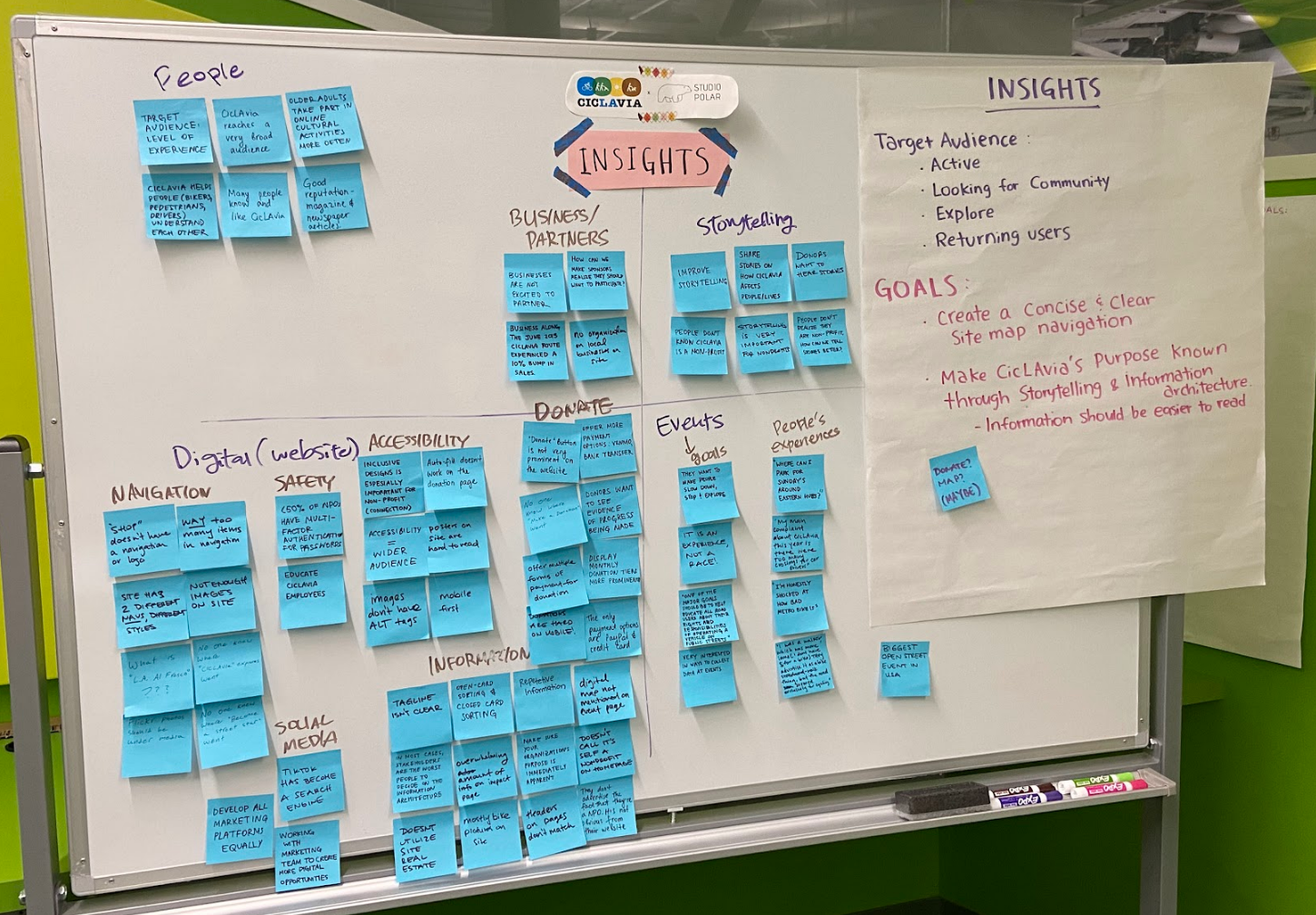
80% of surveyed participants did not use or know about CicLAvia’s current interactive map, even though people wanted more information about what to see, eat, and do along the route.
METHODOLOGY
Two event cycles shaped the final direction.
Oct 9 · Primary Research
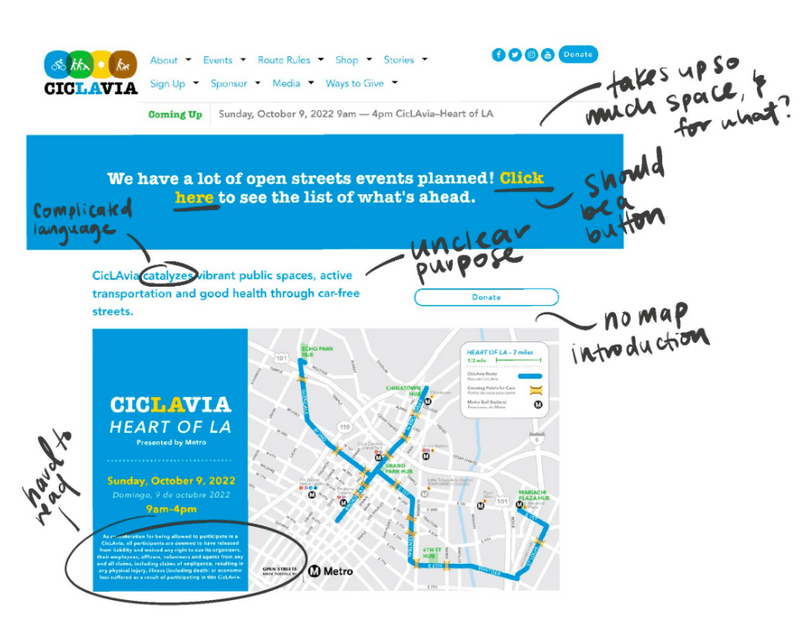
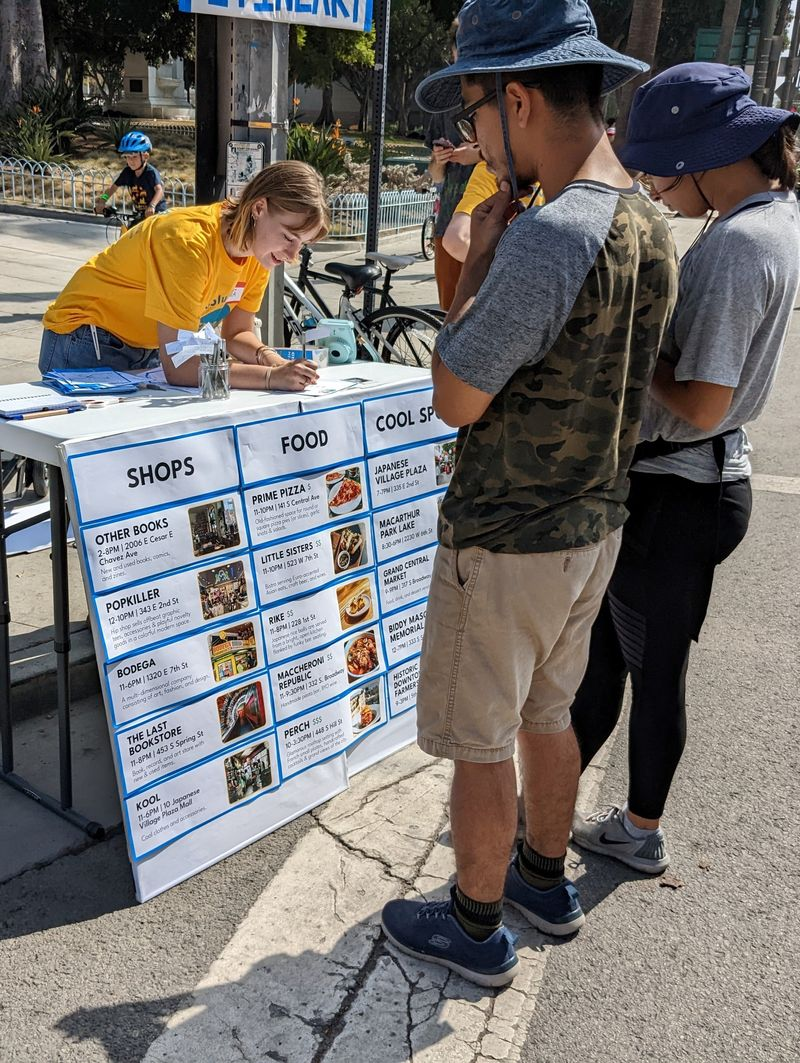
Heuristic evaluation, competitive analysis, netnography, 5 subject-matter interviews, physical itinerary prototype, and a 43-person / 18-question survey.
Dec 4 · Secondary Research
Mapping-platform analysis, Proxi prototype, website concept with businesses and points of interest, user testing with 11 participants, and final iteration.
RESEARCH EVIDENCE
The work moved between audit, field testing, and live-event feedback.
FINAL DIRECTION
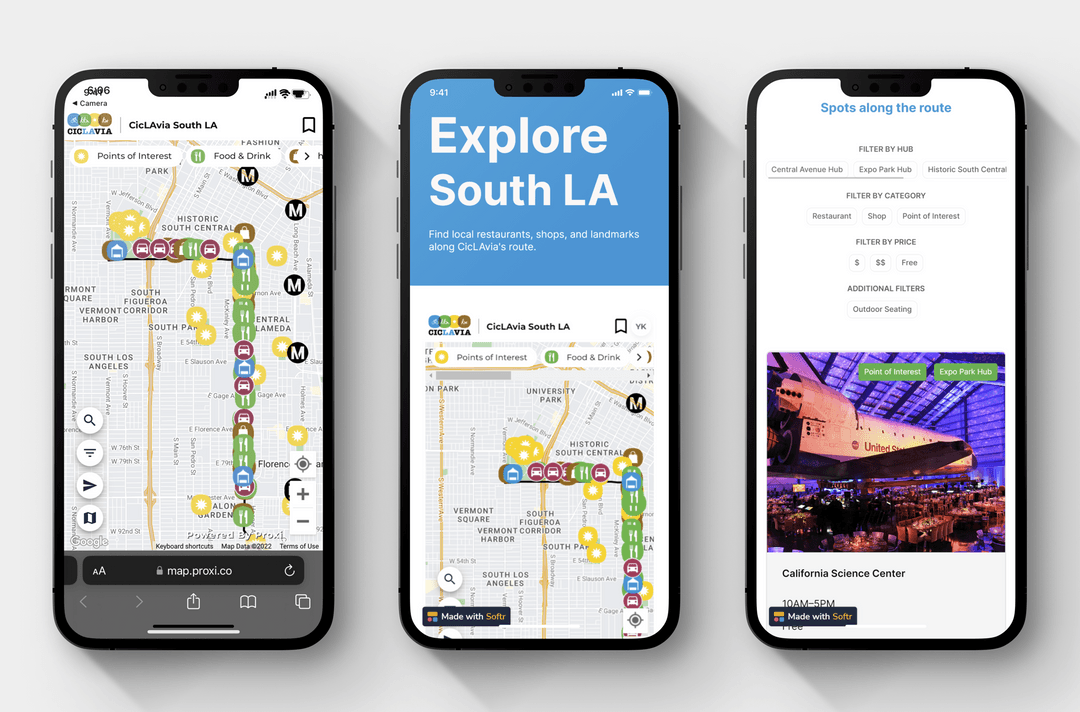
A mobile-first interactive map with local discovery built in.
The final concept combined route navigation with a curated list of restaurants, shops, and points of interest. Testing also surfaced future needs around bathrooms, parking, stronger filters, and route-level business accuracy.
REFLECTION
“Community discovery became as important as route navigation.”
The project showed me how digital wayfinding can support more than movement. By helping attendees discover local businesses and neighborhood stories, the event experience could strengthen both community connection and local economic activity. It also reinforced the value of adapting when research shifts the project direction.