CASE STUDY · PRODUCT DESIGN · MOBILE UX
Whiskers
A research-driven cat adoption experience focused on helping people move from browsing to more confident, informed adoption decisions.
WHY THIS PROJECT
The project started from a personal connection to adoption.
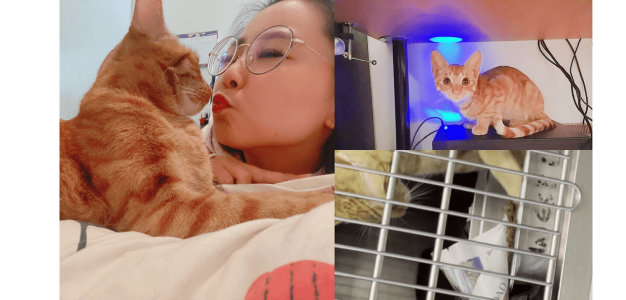
My own experience adopting my cat, OJ, shaped my interest in making adoption feel more accessible and less intimidating. The design challenge became how to combine useful information, personality, and community in one mobile experience.
PROBLEM & INSIGHTS
Research pointed to three things people needed before feeling confident enough to adopt.
01 · Simplicity
People responded positively to a clean, welcoming interface that made adoption feel less daunting.
02 · Personality
Users wanted more than basic facts—they wanted clearer signals about a cat’s personality, behavior, health, and needs.
03 · Community
Feedback repeatedly highlighted social connection, messaging, and support from shelters or other adopters.
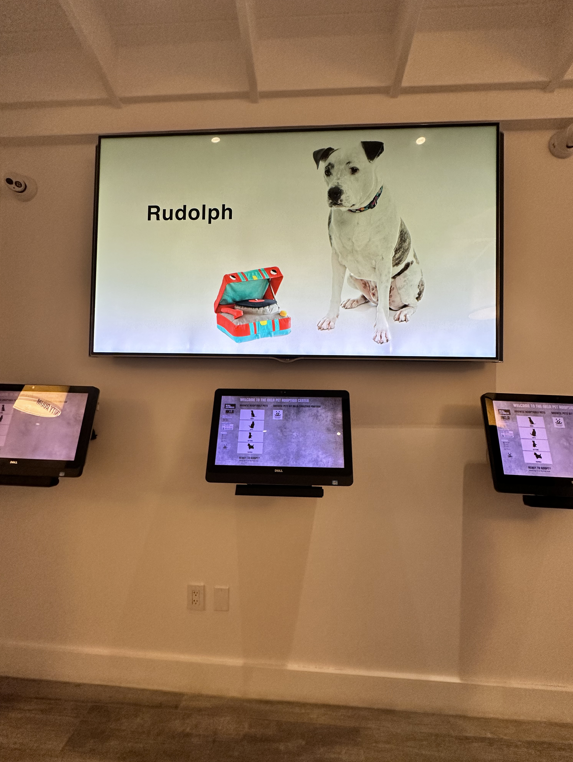
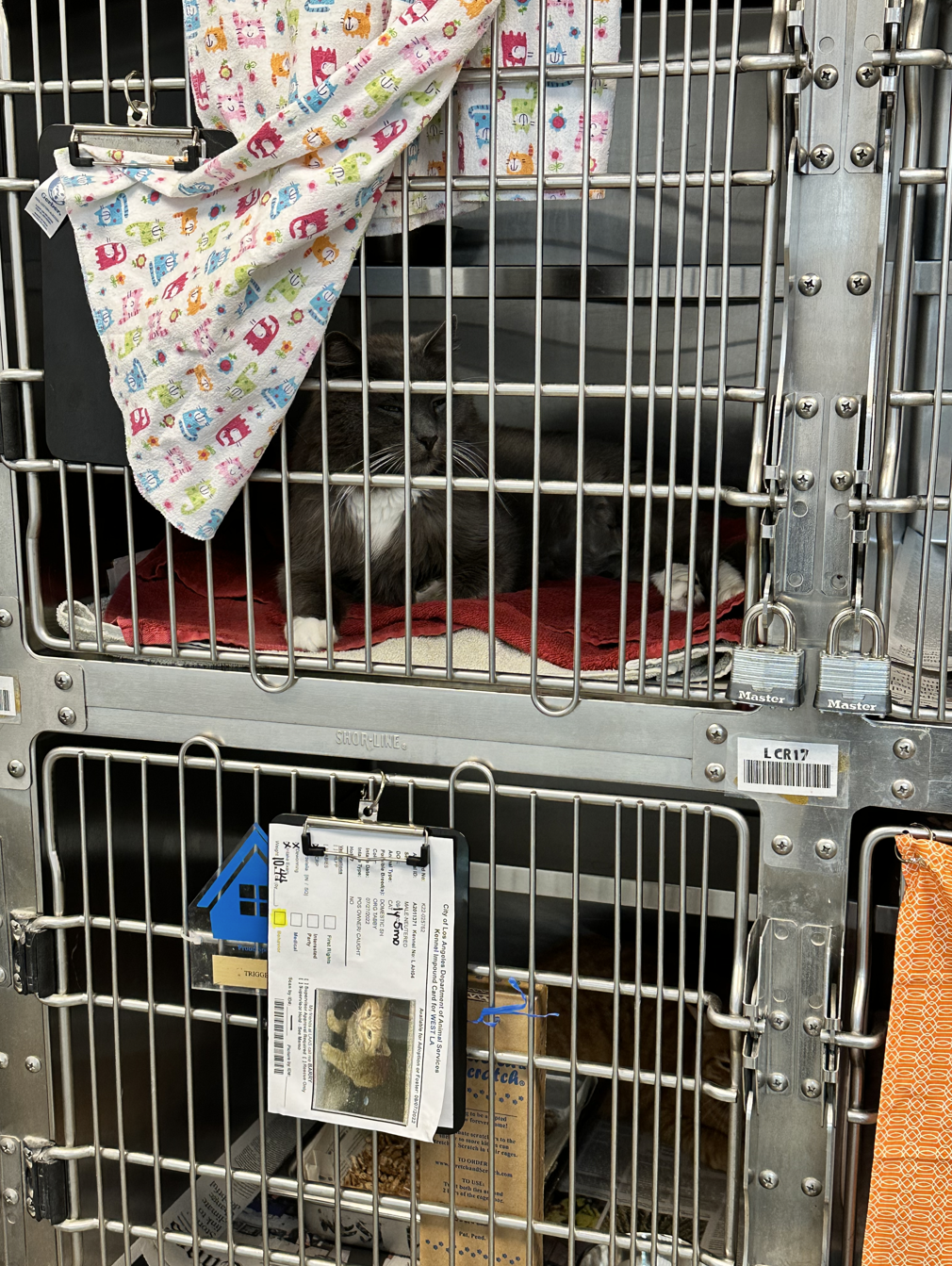
FIELD RESEARCH CONTEXT
RESEARCH EXPERIMENTS
The product direction changed through three different kinds of evidence.
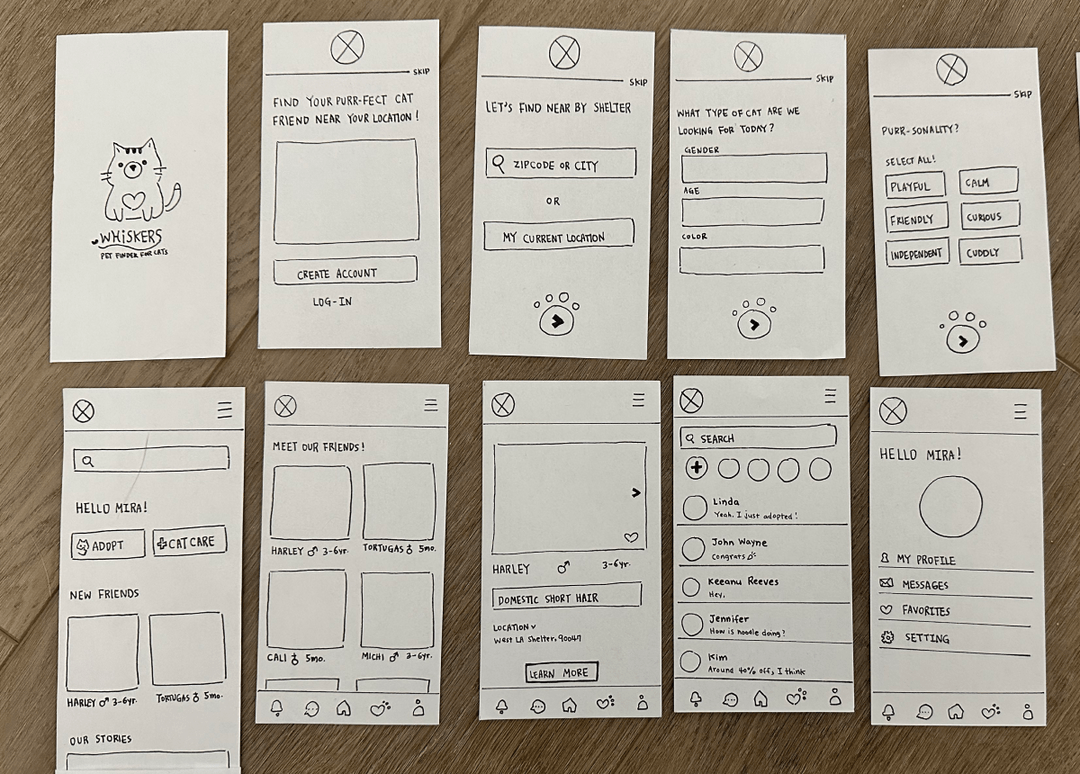
Experiment 01 · Low-Fidelity Prototype
A paper prototype explored onboarding, personality matching, and in-app messaging. Ten participants tested it. People liked the welcoming UI, but questions remained around how messaging should work safely and what detailed cat information was missing.
Experiment 02 · Kennel Card
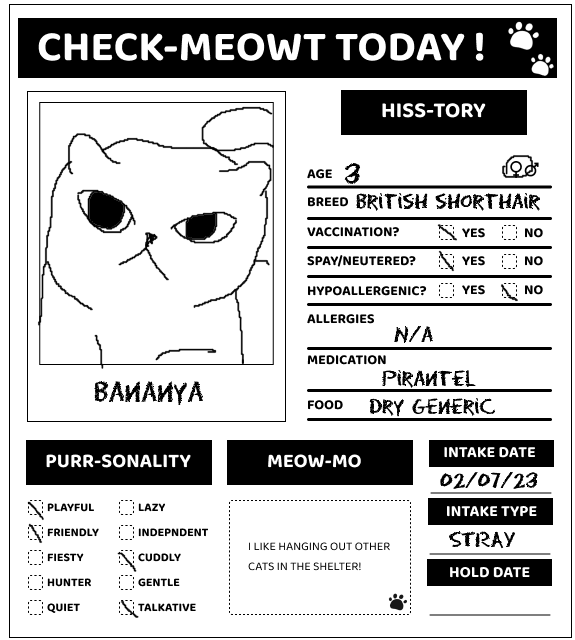
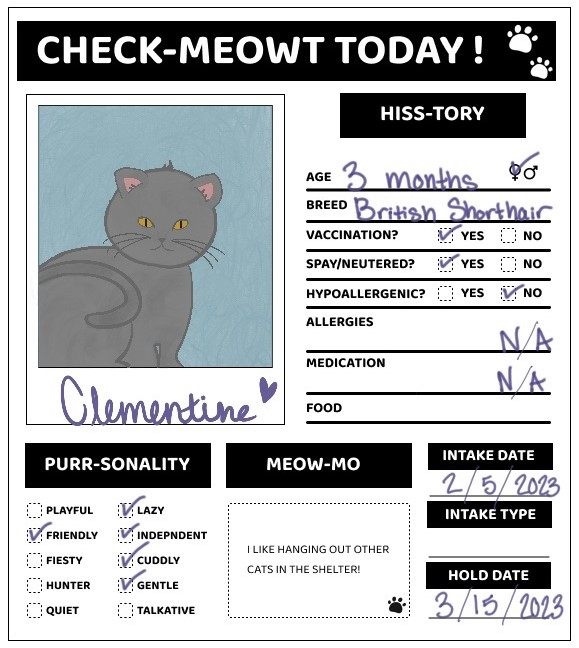
Eight people completed a sample kennel card to show what information they look for when adopting. Feedback highlighted the need to explain unfamiliar shelter terms and account for health, surgery, injury, and behavioral edge cases.
Experiment 03 · Volunteer Interviews
Interviews with volunteers and animal-welfare advocates brought in the shelter-side perspective, including operational limitations, animal care concerns, and the role volunteers play in the adoption experience.
FINAL PRODUCT
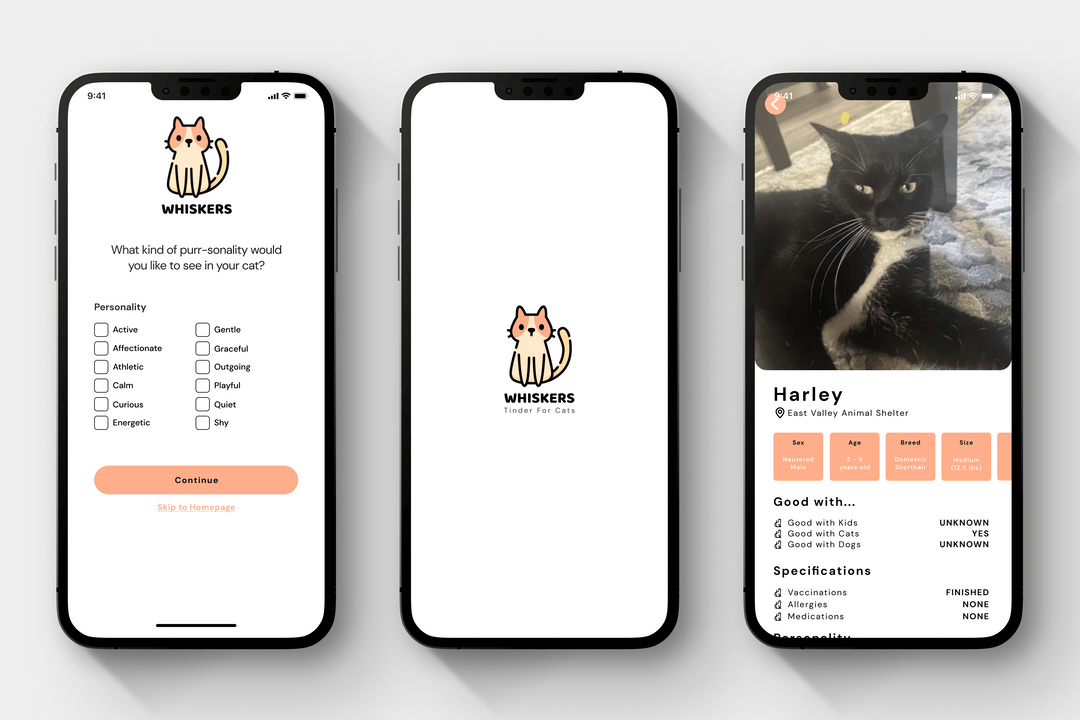
Simple UI, richer information, and community support.
The final concept focused on a cat-first interface, detailed personality and adoption information, and community features that helped potential adopters ask questions and feel more supported. The original project also identified future opportunities for accessibility, video calls with shelters, and subject-matter-expert feedback.
REFLECTION
“Listening changed what the product needed to be.”
The strongest lesson was that adoption is not a transactional decision. People bring emotion, uncertainty, prior experience, and a need for reassurance into the process. Research helped me move beyond a simple pet-browsing app toward an experience that better supports informed, human decisions.